Home › Commercial Concrete Repair and Restoration
Maintain safety and operations with commercial concrete repair in Chesapeake, VA. We fix spalled joints, cracked slabs, and uneven sidewalks at industrial and commercial sites. Our services include joint rebuilding, patching, grinding, and partial slab replacement where needed. Schedule a site visit for commercial concrete repair and restoration today.
Superior Concrete Chesapeake provides professional commercial concrete repair throughout Chesapeake, VA, Virginia and the surrounding area. Our licensed, insured crew delivers safe, clean, on-time work with a free estimate before anything begins. Call (757) 780-5778 or request your free quote.
Commercial Concrete Repair in Chesapeake That Keeps Your Business Moving
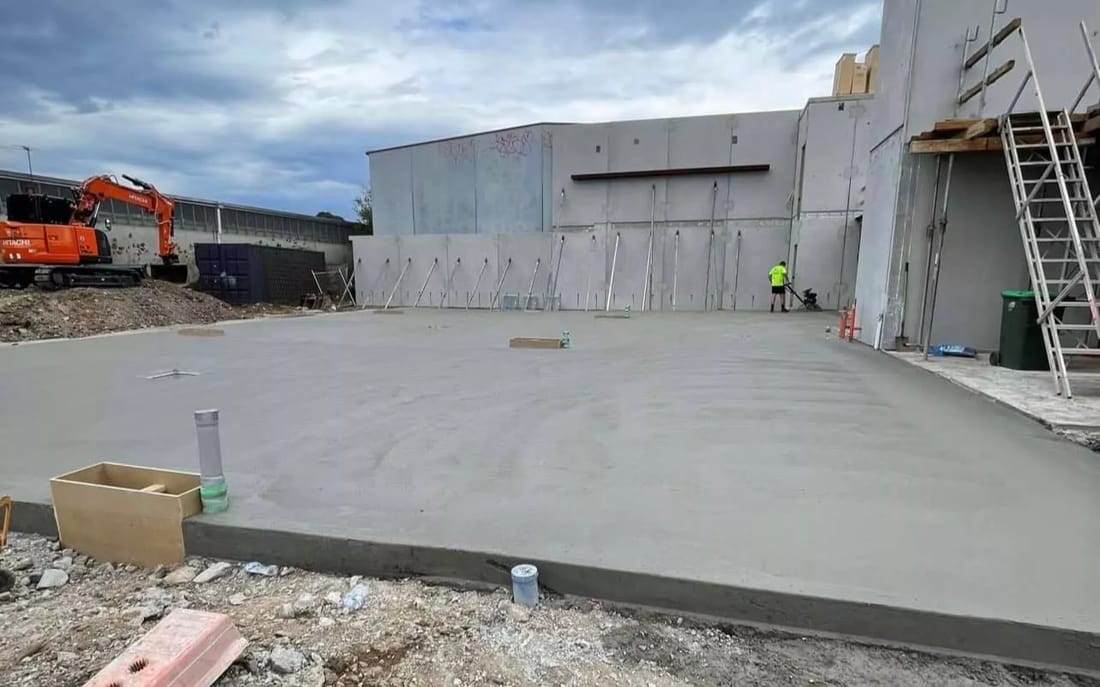
When commercial concrete starts cracking, settling, or spalling around your property, it is not just an eyesore. In Chesapeake, it can create trip hazards, drainage problems, and even OSHA issues that affect daily operations. Superior Concrete Chesapeake focuses specifically on commercial concrete repair and restoration, so we understand how to fix issues without shutting your business down.
Most of our calls in Chesapeake and nearby industrial areas come from property managers and business owners dealing with uneven sidewalks, failing loading docks, damaged dumpster pads, and worn-out parking lot slabs. Coastal moisture, occasional freeze-thaw cycles, and heavy truck traffic work together to break down concrete faster than many owners expect. Our job is to stabilize, repair, or replace only what is needed, while extending the life of the surrounding slab.
We start every commercial concrete repair project with a visual inspection and a level check. We look for patterns like settlement toward storm drains, cracking along utility trenches, rust stains that hint at rebar corrosion, and areas where water is ponding after a rain. Then we talk through how you use the area: forklift routes, truck axle loads, pedestrian flow, and delivery schedules. This lets us design a repair plan that fits your operations in Chesapeake, not a generic kit-of-parts solution pulled from another market.
From there, we outline options in plain language. Sometimes a joint and crack restoration with partial-depth repairs is all you need. Other times, it is wiser to remove and replace a failing slab panel or reconstruct a section of curb and gutter so you do not keep paying for band-aid fixes every year.
How Commercial Concrete Repair and Restoration Actually Works
Commercial concrete repair is more than patching holes. A typical project with Superior Concrete Chesapeake follows a clear sequence so you know what is happening at each step.
1) Investigation and testing: In addition to a visual inspection, we often tap the concrete with a hammer to locate hollow sounding (delaminated) areas. For critical slabs, such as loading docks or warehouse floors, we may core a small sample to check thickness and see how the base material looks. If we suspect poor subgrade support, we may recommend ground penetration checks or proof rolling.
2) Preparation and access: For busy sites in Chesapeake, like retail centers on Battlefield Boulevard or warehouses near the shipyards, we work with you to block off only the affected areas. We sawcut around damaged concrete so the repair has clean, straight edges, then remove loose or unsound material with chipping hammers or surface grinders. This step is noisy, so we often schedule it during slower business hours.
3) Subgrade and base repair: Many commercial concrete problems start below the surface. We re-compact or replace base stone where it has been pumped out by water or rutting. In some cases, especially near dumpster pads or delivery lanes, we add geotextile fabric or extra stone depth to help the slab handle turning truck tires and heavy loads.
4) Structural repair or replacement: For spalled joints and minor localized damage, we perform partial-depth repairs using polymer-modified repair mortars or high early strength concrete mixes. For slabs with deep cracks, severe heaving, or extensive corrosion, we usually recommend full-depth replacement of those panels. That includes new rebar or welded wire reinforcement, chair supports to position steel properly, and control joints cut to encourage controlled cracking.
5) Finishing, curing, and joint sealing: We match the surface finish to the surrounding concrete, whether it is broom, light broom, or trowel. For high traffic commercial areas, we emphasize proper curing, often using curing compounds so the concrete reaches its design strength. We then seal joints with commercial-grade sealants to minimize water intrusion and protect against freeze-thaw damage and de-icing salts.
Throughout the project, we keep a focus on safe access for your customers and employees. Temporary ramps, barricades, and clear signage are part of how we work, not an afterthought.
Common Chesapeake Commercial Concrete Problems and How We Fix Them
Because we work all over Chesapeake and South Hampton Roads, the same types of commercial concrete issues come up again and again. Addressing them correctly the first time can save years of headaches.
Sunken sidewalks and trip hazards: Tree roots, utility trenches, and poor subgrade support often cause walkways to settle or lift. For mild settlement with a sound slab, we may recommend slab stabilization techniques, such as injecting material below the slab to re-support it, along with grinding minor height differences between panels. When panels are cracked through or badly tilted by roots, replacement is usually the right call.
Damaged loading docks and warehouse slabs: Loading areas in Chesapeake see constant forklift traffic, pallet drops, and heavy trailer loads. The first sign of trouble is usually joint edges breaking away or wheel ruts forming where trucks stop. Our repairs often involve joint reconstruction with high strength, impact resistant repair mortars, doweling new slabs into existing ones to transfer load, and improving the base in high impact zones. In some dock areas, we use fiber-reinforced concrete for added toughness.
Dumpster pads and drive lanes: Waste trucks place huge point loads on small pads. When pads were originally built with light-duty concrete or without enough base, they crack and break apart. Superior Concrete Chesapeake frequently demolishes failing pads and installs new, thicker commercial-grade pads with proper reinforcement and a tied-in apron so trucks roll smoothly on and off without chipping the edges.
Surface spalling and scaling: Coastal air, occasional winter salting, and standing water can cause the surface of concrete to flake or scale. If the damage is shallow and the concrete is structurally sound, we may resurface the slab with a bonded overlay or repair mortar designed for commercial traffic. For deeper damage, we remove and replace those areas, then address drainage issues so water does not sit and create the same problem again.
Drainage and ponding issues: Many Chesapeake properties were built before current stormwater standards. When water collects at entrances, dock doors, or in parking lot low spots, it worsens concrete damage and creates safety hazards. We correct grades where possible, rework curb and gutter, and sometimes install trench drains or new inlets so water has a defined path away from your building.
What Affects the Cost of Commercial Concrete Repair
Commercial concrete repair costs are driven by more than just square footage. When Superior Concrete Chesapeake puts together a proposal, we look closely at five main factors so you get an honest budget and no surprises.
1) Structural severity: Hairline surface cracks or lightly spalled joints are typically much less expensive to fix than full-depth cracks, heaving, or areas with active settlement. Minor issues can often be repaired with partial-depth methods and fewer mobilizations. Severe issues often require demolition, base replacement, reinforcement, and full-depth concrete replacement.
2) Access and phasing: If we can pull a truck right up to the work area, the job is more efficient. Interior slabs, tight alleys, upper level decks, or work inside active warehouses usually require more labor and specialized equipment. Phasing the work around busy schedules, like retail rush hours or shipyard shifts, can increase total project time but helps keep your business running.
3) Load requirements and mix design: Concrete that supports heavy trucks or industrial equipment needs stronger mixes, thicker slabs, and better reinforcement than a basic sidewalk. For example, a heavy-use loading dock might require 6 to 8 inches of concrete with rebar and a high psi mix, while a plaza walkway might only need 4 inches with wire mesh. Higher strength mixes and thicker slabs cost more up front, but they usually pay off in reduced maintenance.
4) Site conditions and drainage: If the site has poor drainage, saturated soils, or ongoing erosion, we often need to invest time in subgrade repair and water management before placing new concrete. In Chesapeake, we see this often in low-lying areas and near retention ponds. Fixing underlying drainage issues adds cost to the repair, but skipping it leads to repeat failures.
5) Finish, coatings, and special requirements: If your project requires non-slip finishes, chemical-resistant coatings, striping, or embedded anchors for racking systems, those elements affect both material and labor costs. We spell these details out in our proposal so you can see line items for standard repair work versus optional upgrades.
We are always open about pricing. During our site visit, we will walk you through what can be done as a short-term fix, what would be a long-term solution, and the cost differences between the two, so you can match the repair scope to your operating budget and long-term plans for the property.
Why Local Experience Matters for Commercial Concrete Restoration
Working with a local concrete contractor matters because soil conditions, climate, and code requirements vary from one region to another. Superior Concrete Chesapeake is used to the clay and sandy fill soils found around Greenbrier, Deep Creek, and Western Branch, as well as the drainage challenges near the Elizabeth River and other waterways. That experience shapes how we design repairs that last here, not just in theory.
For example, we know which areas of Chesapeake tend to hold water after storms, which influences how we slope slabs and place control joints. We also understand regional building and accessibility codes for commercial sidewalks and ramps, which helps prevent failed inspections and rework. When we restore damaged concrete around entrances or along accessible routes, we pay attention to running slopes, cross slopes, and lip heights so your site stays compliant.
Communication and scheduling are another reason to choose a nearby crew. Our team can meet you on site quickly, coordinate with other local trades if your project involves utilities or landscaping, and adjust to weather changes that are common in Tidewater. If heavy rain is forecast, we can shift pours, focus on prep work under cover, or protect fresh concrete as needed.
Finally, we stand behind our repairs because we live and work in the same community you do. Repeat calls from local property managers, facility directors, and business owners are a big part of how Superior Concrete Chesapeake stays busy. That encourages us to recommend repair strategies that fit Chesapeake conditions and your long-term interests, not just what is cheapest on the day of the quote.